






 Verified by QR-cadre.com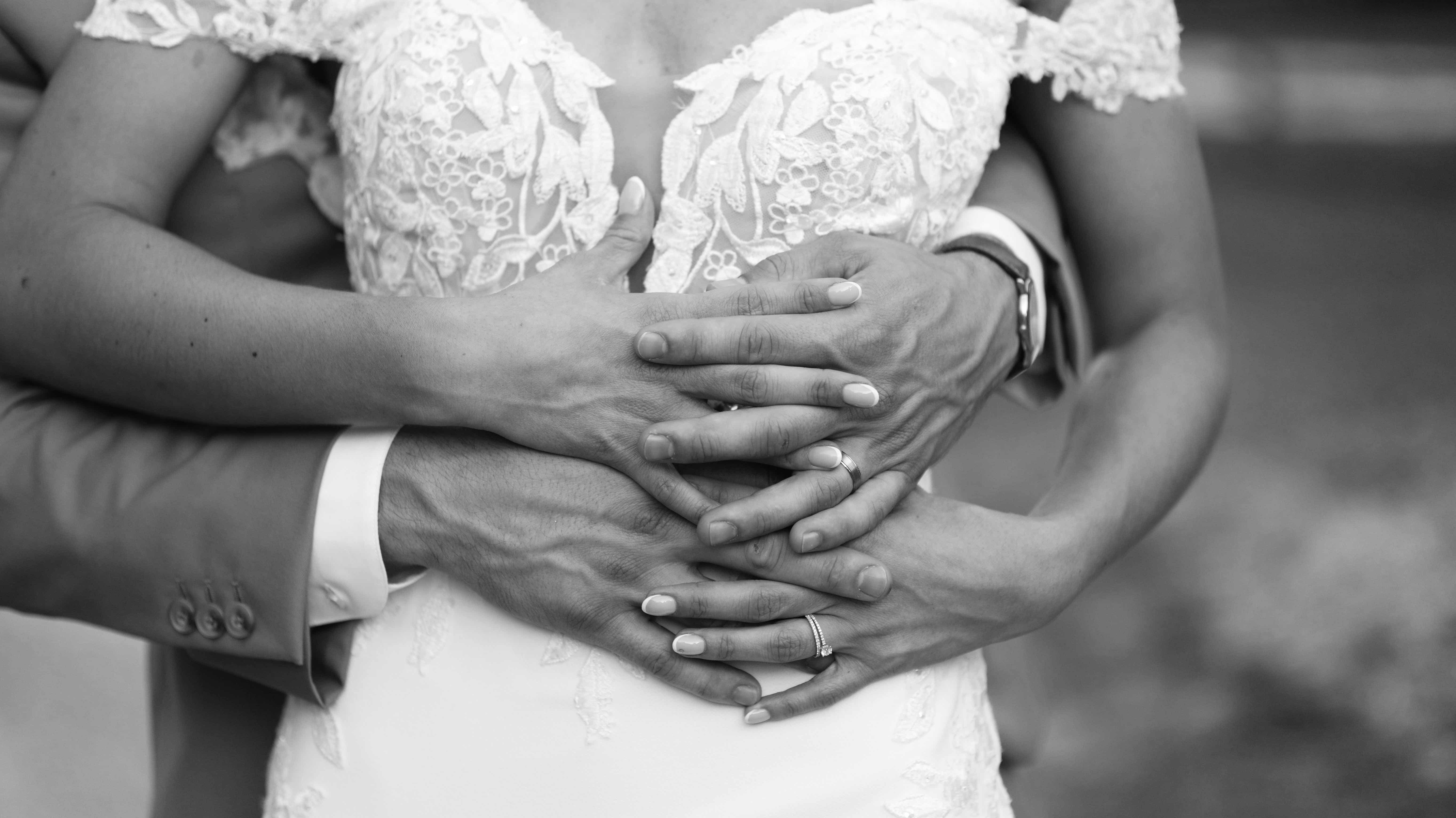
Introduction: two photos, two different readings
When couples receive their wedding gallery, the same thing almost always happens: they linger longer on the black and white images. Not necessarily the most spectacular ones, not the most "Instagrammable" ones, but a few images that hit differently and say something colour did not say.
It is not nostalgia. It is not a trendy filter. It is a matter of perception: in some wedding moments, removing colour focuses the eye exactly where it should go. In others, it does the opposite and the image becomes flat, cold or even funeral-like.
So is black and white a good or bad idea for a wedding? It depends on the moment. That distinction is exactly what this article explains.
A good idea: the moments that deserve black and white
Some wedding scenes all have one thing in common: the emotion is in the face, the gesture and the light, not in the setting. That is exactly where black and white becomes stronger than colour.
The first look
When the groom sees his partner coming down the aisle for the first time, something uncontrollable happens on his face. In colour, the tie, the flowers and the guests' outfits all compete inside the frame. In black and white, that visual noise disappears. Only the look remains, and that look deserves to stand on its own.
The tears, the real ones
A tear on a made-up cheek can get lost in skin tones and reception-room colours. In black and white, it shines. It catches the light differently and becomes the centre of the image. It is one of the clearest cases where removing colour physically reinforces emotional readability.
The hands: texture and symbolism
Hands holding each other, fingers slipping on a ring, palms joined before the ceremony: this is texture photography before it is colour photography. Black and white reveals skin grain, muscle tension and the metal of the ring in side light. In colour, the eye gets distracted by skin tones and warm reflections. In black and white, shape and symbolism take over.
The first dance
The couple's dance reads like a graphic composition: two silhouettes, one movement, one light source. Black and white turns the scene into something almost choreographic. Colour, with the room, the guests and reception lighting, often breaks that clarity. In black and white, the two silhouettes stand alone.
Hugs with parents
These are some of the most intense scenes of the day and, paradoxically, some of the least decisively photographed. When a mother holds her daughter just before the ceremony, or a father fights back tears while squeezing the groom's hand, black and white protects those images. It gives them weight without making them heavy.
Moments of solitude before stepping in
The few quiet minutes before entering, the bride alone with her bouquet, the groom straightening himself one last time in front of a mirror: these scenes belong only to the couple, and black and white makes them universal without making them impersonal.
See the difference: the same scene in colour and in black and white
The best way to understand what black and white changes is to compare the exact same image in both versions. Click the button to switch.
Comparison 1
Couple portrait: gaze, emotion, texture
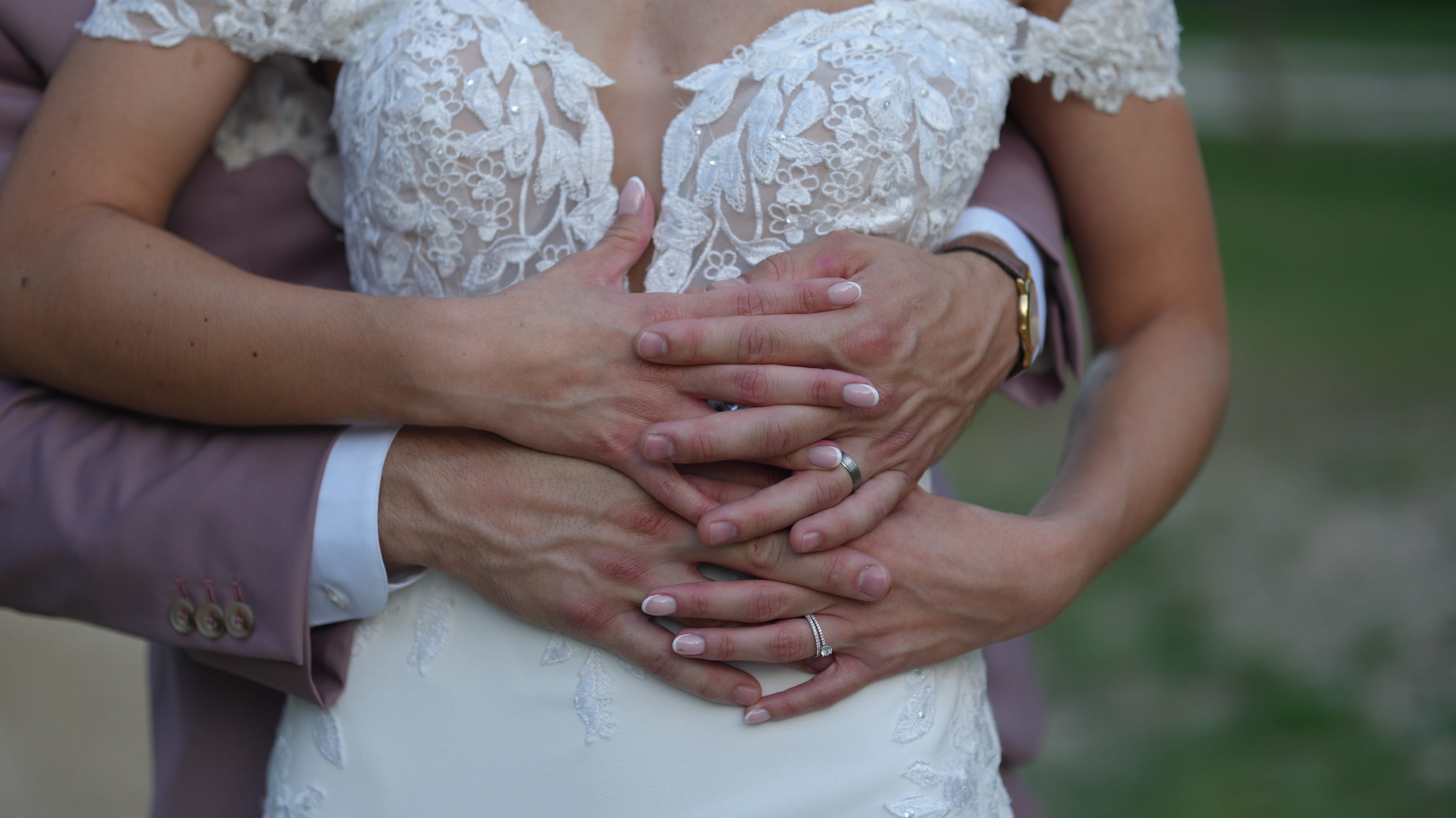
Click the button to switch from one version to the other.
In colour, the first look is descriptive: the dress, the flowers, the skin tones, the setting. The eye takes inventory before reading the emotion. In black and white, all of that disappears. What remains is the gaze, the tension in the smile, the light on the cheek and the texture of the veil. The black-and-white version does not give less information. It gives the right information, in the right order.
Comparison 2
Bouquet toss: movement, energy, expressions
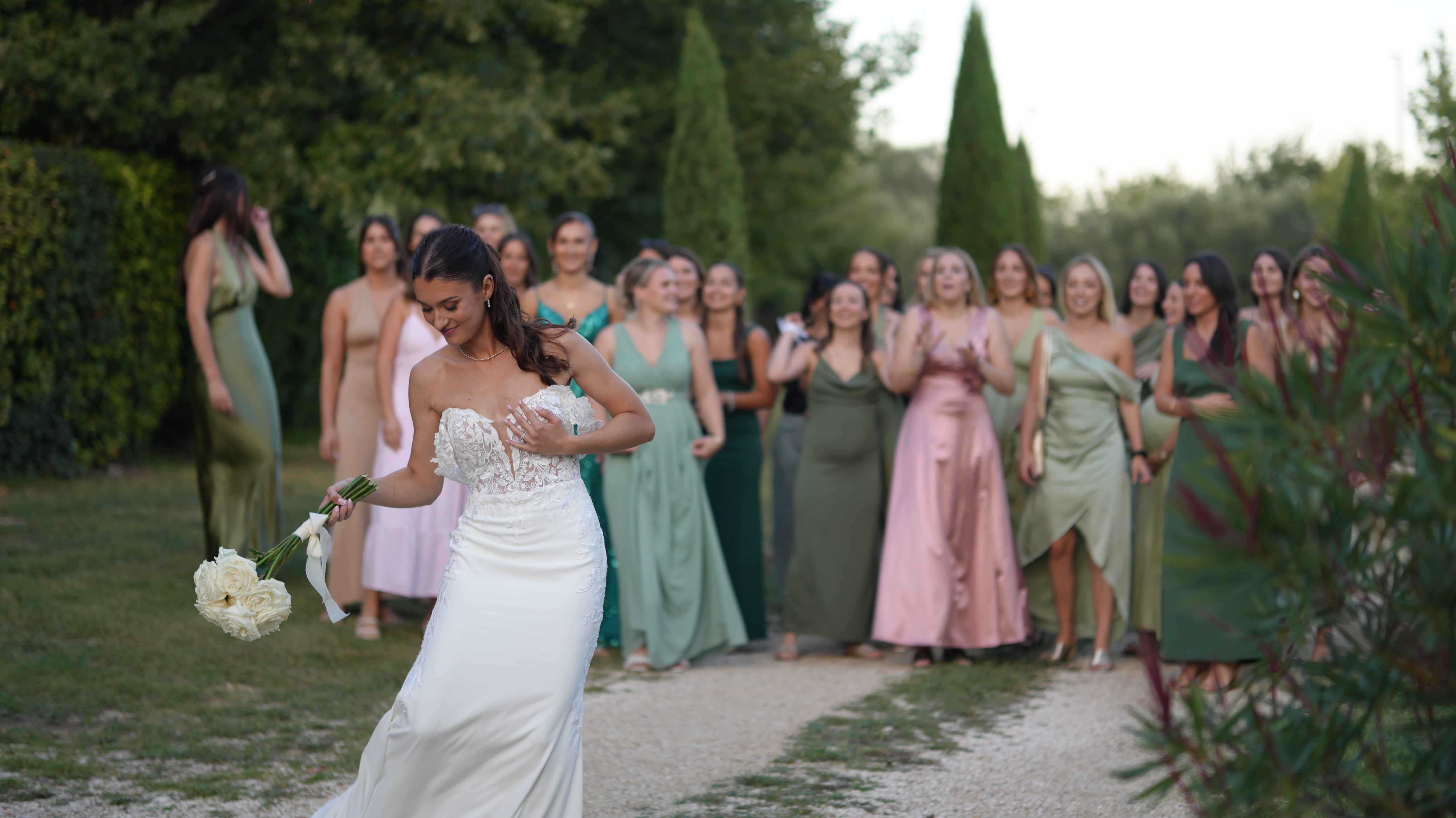
Click the button to switch from one version to the other.
A scene as colourful as a bouquet toss may seem difficult to convert to black and white. Yet colour scatters attention here: dresses, flowers and the room all compete. In black and white, gestures and expressions take over again. The image becomes graphic and timeless, where colour made it feel more anecdotal.
A bad idea: when black and white creates a funeral-like effect
Black and white works when the original image already has light, contrast and a strong subject. If you take an underexposed image in a dark room with poor lighting and convert it to black and white, you get something flat, grey and heavy. Faces look dull and lifeless. The atmosphere becomes oppressive and yes, it can look like an old memorial photo.
What makes a strong black and white wedding image
- Visible light: there must be clear highlights somewhere, on a face, a veil or a window in the background. Without that, everything falls into dark grey.
- Real contrast: the relationship between bright and dark areas must be distinct. A flat black and white image has no depth.
- A subject with expression or movement: a stiff pose in poor light really can look old-fashioned. Expression or movement brings back the life colour can no longer provide.
- Readable eyes: this is the final test. If you cannot read the eyes, the image does not hold in black and white. The eyes are what keep a face alive.
The simple rule
Before converting to black and white, ask one question: does this photo still have something to say without colour? If the answer is no, if the image is only interesting because the flowers are beautiful or the dress is colourful, keep it in colour. Black and white does not save a weak image. It reveals what was already strong underneath.
How to choose the right black and white wedding photo to frame
Among all your photos, some black and white images deserve to be framed and others do not. Here is how to sort them quickly.
The criteria for a black and white wedding photo that works on the wall:
- Eyes that feel alive: you can see them, they have depth and they say something.
- Visible highlights: at least one bright zone in the frame, such as a veil, a window or light on the skin.
- A real moment: a gesture or an expression, not a generic pose.
- Readable from two metres away: if you still understand what is happening from a distance, the image will last over time.
A good wedding photographer instinctively knows which scenes call for black and white and can help you choose the one that deserves a large format in your home.
To go further, QR-cadre offers a wedding photo-video frame: your best black and white image paired with a short film of your day, the emotion of the photo and the life of the film in one object placed in your living room.
Looking for a wedding photographer who knows how to read these moments?
QR-cadre supports couples in creating wedding photos and films that last, from documentary coverage to cinematic storytelling.
Wedding photos → Wedding film →Conclusion
Black and white in a wedding is not just an aesthetic. It is an editorial choice. It serves the moments where emotion lives in the face, the gesture and the light, not in the decor. It does not work everywhere, but where it works, it says something colour could not say in the same way.
And when it truly works, it is often the photo that ends up framed. Not just because it looks beautiful, but because it says something true, something that does not age.